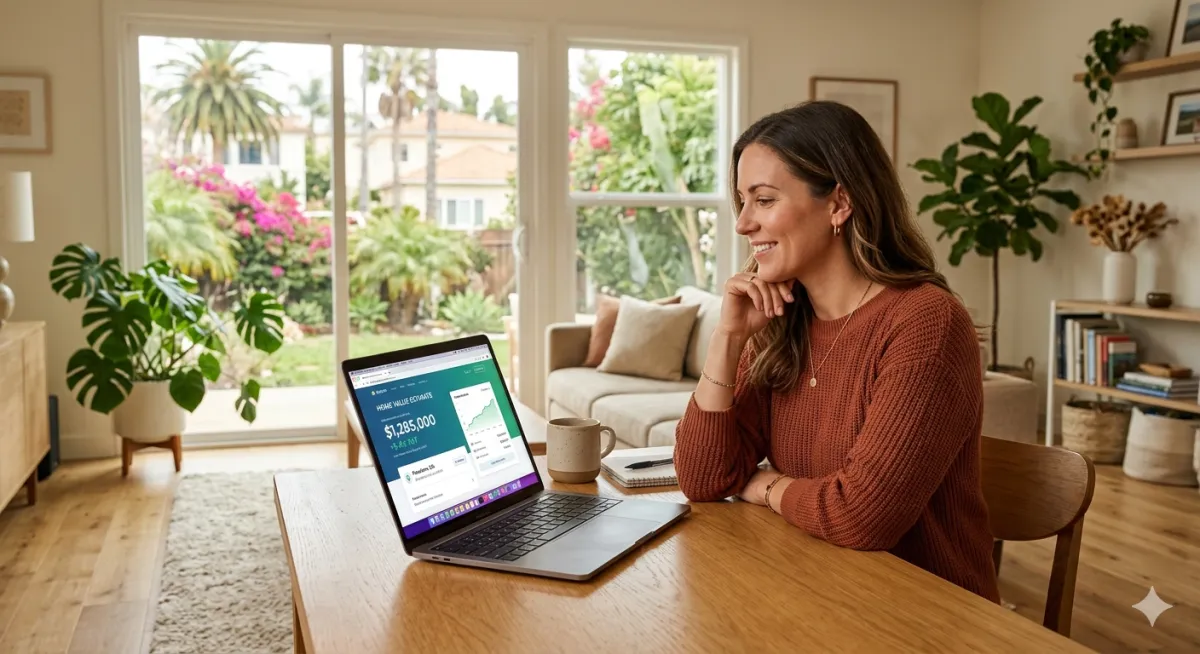
Why Zillow Can Be Wrong About Your Home Value in Whittier, CA and Surrounding Communities
Why Zillow Can Be Wrong About Your Home Value in Whittier, CA and Surrounding Communities
If you own a home in Whittier or anywhere in the surrounding communities, there is a good chance you have done this at least once.
You typed your address into Zillow.
You looked at the number.
And then one of two things happened.
Either you thought: that seems way too low.
Or you thought: wait, is my house really worth that much?
That moment is more common than people realize. And it can be surprisingly misleading – because while Zillow can be a useful starting point, it is not the same thing as understanding what your home would actually sell for in today’s market.
In Whittier, Pico Rivera, Hacienda Heights, La Puente, and West Covina, Zillow can be wrong about your home value because it cannot fully account for your home’s condition, layout, updates, buyer appeal, exact location, or how your property compares to what buyers are actually choosing in your neighborhood right now.
That is the real issue. Zillow gives you a number. But selling decisions should not be built on a number without context.
Why Homeowners Trust Zillow More Than They Should
Zillow feels helpful because it is fast. You do not have to call anyone. You do not have to schedule anything. You do not have to commit to selling. You just get a number – instantly.
For homeowners who are simply curious, that feels safe. And it makes sense. Most people checking Zillow are not ready to sell. They just want to know if selling is even worth thinking about, whether they have equity, whether a move-up or downsize might be possible.
The problem is that a fast answer is not always a useful answer – especially when major financial decisions get made around it.
Zillow Is an Estimate, Not a Pricing Strategy
This is the most important thing to understand about the Zestimate.
Zillow is not giving you a true market value the way most homeowners assume. It is giving you an estimate based on publicly available data and an automated model. That can be directionally helpful – but it is not the same as a real pricing strategy, a local comparative analysis, or a professional evaluation of how your specific home would actually compete in today’s market.
If you use Zillow as a curiosity tool, it may be fine. If you use it as the foundation for deciding whether to sell, how much equity you have, or what to expect at closing – it can send you in the wrong direction.
Why Zillow Struggles in the Whittier Area Specifically
Southeast Los Angeles County and the eastern San Gabriel Valley are not one flat, uniform market. And that is exactly where automated estimates break down.
A home in Uptown Whittier does not behave the same way as a similar-sized home in the 90606 ZIP code. A property in the Spyglass Hill hillside community commands a different conversation than a comparable square footage in the flatlands below. A home in Pico Rivera may attract a different buyer pool than one in Hacienda Heights – even at the same price point. West Covina and La Puente each have their own neighborhood-level dynamics that a national algorithm simply cannot capture with precision.
And that is before you get into what Zillow genuinely cannot see.
It does not walk through your home. It does not know if your kitchen feels dated but functional or dated and distracting. It does not know if your backyard is highly usable or awkward. It does not know if your layout flows well for how buyers live today. It cannot feel whether a home reads as move-in ready or whether buyers are going to walk in and start mentally subtracting.
That is the gap – and it is a significant one.
Zillow Does Not Understand Buyer Emotion
This is something sellers consistently overlook.
A home is not just worth what data says. It is worth what buyers in your price range are willing to pay when they compare your home to everything else available to them. And buyers do not compare homes like spreadsheets. They compare what a home feels like when they walk in.
Does it feel cared for? Does the layout make sense? Does it feel move-in ready or does it feel like a project? Does it feel like a relief or like a problem?
A buyer may pay more for a home that feels simple, clean, and easy to say yes to. The same buyer may discount a home that feels cluttered or neglected – even if the square footage is identical to the one they just loved.
Two homes that look nearly the same on paper can create very different reactions in the market. Zillow reads data. Buyers react to experience. That difference is exactly why the Zestimate can miss.
The Zestimate Shock Problem
This happens all the time in the Whittier area and surrounding communities.
A homeowner sees a Zestimate that feels high and starts mentally spending money that does not exist yet. Or they see a number that feels low and assume selling is not worth it.
Both reactions can lead to bad decisions.
A high estimate can create unrealistic expectations – leading homeowners to overprice their property, resist sound advice, or assume the market will validate a number that buyers never actually support. The result is a home that sits, accumulates days on market, and eventually sells for less than it would have with a correct starting price.
A low estimate creates the opposite problem. It can make homeowners dismiss a move that was actually possible. It can cause them to underestimate their equity position and stay stuck in a home they are already done with.
Zillow is not dangerous because it exists. It becomes a problem when people treat it like certainty.
What Actually Determines Your Home’s Value in This Market
If you want an answer you can actually use, your home’s real market value is shaped by several things working together – and an automated tool only captures some of them.
Location – specifically. Not just the city name, but the specific neighborhood, street, and proximity to what buyers in that price range value. In Whittier alone, the difference between Uptown, the hillside communities, and the flatlands can be meaningful.
Condition. A home that feels maintained, clean, and move-in ready consistently performs differently than one with visible deferred maintenance – even when the square footage is the same.
Layout. Some floor plans live well and buyers feel it immediately. Others create friction. That response shows up in offers and in how long a home sits.
Updates. Not all upgrades return equal value. Some updates make a home significantly more competitive. Others cost more than they return. Knowing which is which matters before you invest.
Current competition. What else is available to buyers right now in your price range and ZIP code shapes how your home gets perceived. This changes constantly – which is why a stale estimate can be even less useful than homeowners realize.
Why Two Similar Homes Can Sell for Different Prices
This is one of the biggest sources of confusion for homeowners in Whittier and surrounding communities.
You see a home nearby close at a number that surprises you. Same bedroom count. Roughly the same size. And you think – mine should be worth that too.
Not always.
The difference is often not visible in an automated estimate. It shows up in how the home felt, how it was presented, how it was priced, and how it competed against everything else available to buyers at that moment.
One home sells fast and strong. Another similar home sits. The Zestimate on both may have been nearly identical.
A Range Is More Useful Than a Single Number
Most homeowners want one clean number because it feels simple. But the most useful answer is almost always a range – and the range depends on strategy.
Your home may have one realistic value as-is. It may perform better with improved presentation or a few targeted repairs. It may land differently depending on what is competing in your price point this month versus next.
That does not mean the value is unclear. It means the outcome is partly within your control. And that is actually a good thing.
The right question is not: what is the exact number?
The better question is: what is the realistic range based on how I would actually sell this home in today’s market?
That is the answer you can build a plan around.
The Bottom Line on Zillow and Your Whittier Area Home
Zillow is fine as a first stop when curiosity kicks in. It should not be the final stop when a real decision is on the table.
If you are seriously thinking about selling – or even just trying to understand whether a move might make sense – the smarter step is to get real context around that number. What are comparable homes actually selling for right now? How does your home’s condition compare? What are buyers in your price range responding to? What would your realistic net look like?
Those answers give you something you can trust – and something you can actually make a decision from.
If you want a clear, honest picture of what your home is worth in today’s market in Whittier, Pico Rivera, Hacienda Heights, La Puente, or West Covina, I can walk you through it.
Reach out at xprtrealestate.com.
