Should You Build an ADU on Your Whittier Property? What It Actually Costs and What It Actually Returns
Should You Build an ADU on Your Whittier Property? What It Actually Costs and What It Actually Returns
Every few weeks a Whittier homeowner asks me some version of the same question.
My backyard is just sitting there. Could I put a unit back there? And would it actually be worth the money?
Quick answer: yes, in most cases, if your lot has the space and your budget can handle it. A detached ADU in the Whittier area can add both a rental income stream and real resale value to your property. It is not free money and it is not instant – but for the right property, it is one of the smartest moves a homeowner can make right now.
Here is what every Whittier homeowner considering an ADU should actually understand before they call a contractor.
What an ADU Actually Is
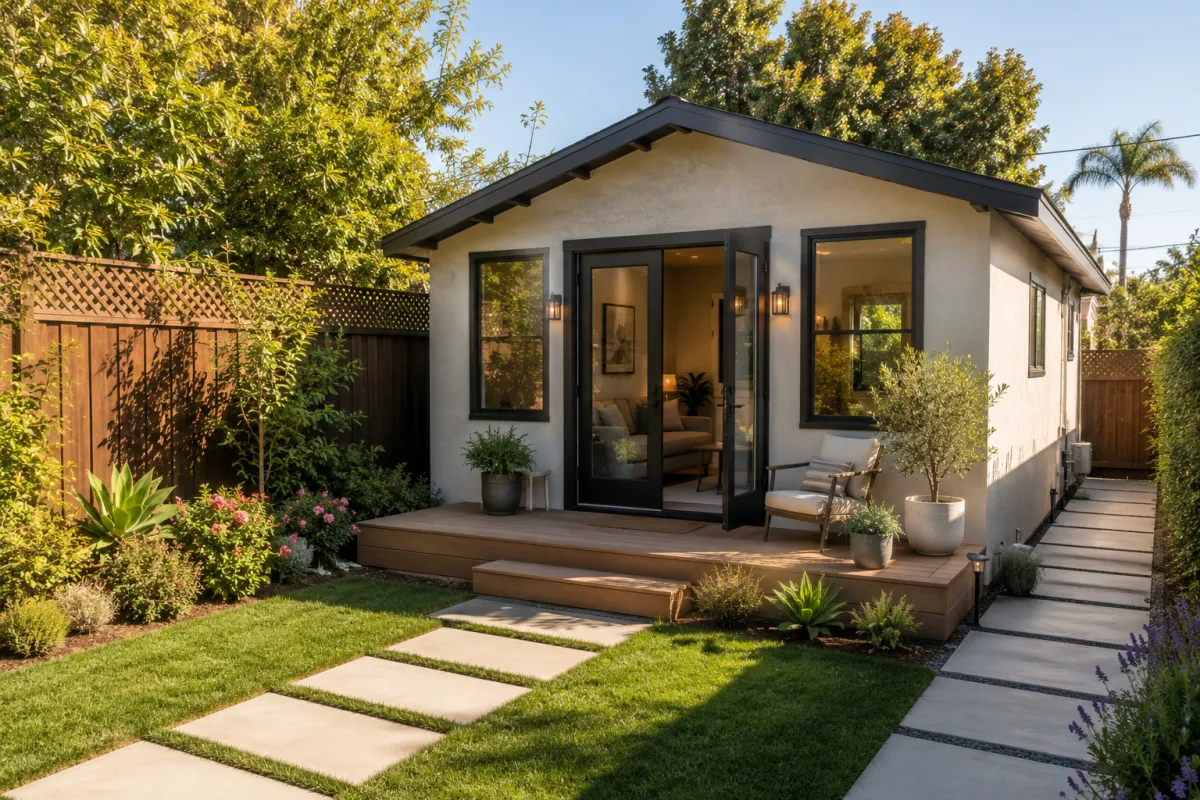
An accessory dwelling unit – ADU – is a secondary, fully independent living space on a property that already has a primary home. It can be detached in the backyard, attached to the existing structure, or converted from existing square footage like a garage or bonus room.
California has made ADUs significantly easier to permit over the last several years specifically because the state needs more housing. Los Angeles County and the cities and unincorporated communities it covers – including Whittier – have generally followed the state’s streamlined approach. Compared to a decade ago, the permitting environment today is dramatically more favorable for homeowners who want to add a unit.
What It Actually Costs in the Whittier Area
This is where most homeowners get surprised, in both directions.
A garage conversion is typically the least expensive path – often landing somewhere between $100,000 and $175,000 depending on the condition of the existing structure, the utility work required, and finish level. If your garage is in solid shape and already has some utilities nearby, the lower end of that range is achievable. If the structure needs significant work or utility connections require long runs, the number climbs.
A new detached unit built from the ground up in the Whittier area typically runs between $200,000 and $350,000 or more for something in the 500 to 800 square foot range with a full kitchen and bathroom. Permitting, site work, utility hookups, and any grading required on hillside lots can add meaningfully to either number.
Get a real bid from at least two licensed contractors before you fall in love with a number you saw in an online article. Costs vary significantly depending on your specific lot configuration, the scope of work, and current material and labor costs in the area.
How Whittier Homeowners Are Typically Paying for It
Most homeowners are not writing a check for the full cost. The most common paths I see are using equity from the existing home to fund construction – through a home equity line of credit or other financing – or working with a lender on a renovation-style loan that wraps construction costs into a new financing structure.
Which approach makes sense depends heavily on your current mortgage situation, your existing equity, and your overall financial picture. Talk to a lender before you talk to a contractor about design. The financing conversation should always come first, because it determines what you can realistically build and whether the project actually pencils out for your situation.
What Rental Income Actually Looks Like in Whittier
In the Whittier and Southeast Los Angeles County rental market, a well-built one-bedroom ADU can realistically rent somewhere in the range of $1,800 to $2,400 per month depending on the specific neighborhood, the quality of finishes, and whether the unit is detached with its own entrance and outdoor space.
That is meaningful monthly income that can offset a construction loan payment significantly. For a lot of Whittier homeowners, the rental income is the difference between the project making financial sense and not.
It is worth noting that Whittier has a strong rental demand base – proximity to employment corridors, established neighborhoods, and relatively limited rental inventory all support consistent demand for well-maintained rental units.
What an ADU Does for Your Resale Value
Even homeowners who never intend to rent the unit out tend to see a real bump in resale value when they eventually sell. Buyers increasingly want flexibility – space for aging parents, adult children returning home, a true home office that is completely separate from the main house, or simply the optionality of future rental income.
An ADU does not always return dollar for dollar what it cost to build, and the specific return varies by property and market conditions. But it consistently makes a Whittier property stand out among competing listings and often translates to faster sales and stronger buyer interest. In a market where differentiation matters, a well-built ADU is one of the clearest differentiators available.
The Timeline You Should Actually Plan For
Permitting alone can take several months even under streamlined state rules. Construction itself typically runs six to twelve months from permit approval to certificate of occupancy, depending on the scope. Almost every project runs longer than the contractor’s initial estimate – build in a cushion when you are planning your timeline and your finances.
The Questions to Ask Before You Start
Before you sign a contractor agreement, confirm your specific lot size and setback requirements with the City of Whittier or Los Angeles County – depending on whether your property is within city limits or unincorporated. Verify that your lot can accommodate the ADU size and configuration you are envisioning. Get at least two contractor bids. And talk to a lender about financing before you commit to anything.
The homeowners who end up frustrated with an ADU project are almost always the ones who reversed that order – they fell in love with a design before they understood what they could actually build and how they would pay for it.
Is an ADU Right for Your Whittier Property?
That depends on your specific lot, your financial situation, your goals, and how long you plan to stay in the home. For homeowners who have the space, the equity, and a long enough time horizon to benefit from either rental income or resale value, an ADU is one of the most practical wealth-building moves available to a California homeowner right now.
It is worth a real conversation to find out if it makes sense for your specific situation.
FAQ
Do I need a permit to build an ADU in Whittier, CA?
Yes. Even under the state’s streamlined ADU rules, you still need to go through the permitting process. Whether your property is within the City of Whittier or in an unincorporated area of Los Angeles County affects which jurisdiction you work with.
Can I use an ADU for a family member instead of renting it out?
Absolutely. Many Whittier homeowners build ADUs specifically for aging parents or adult children, and that flexibility is a significant part of what makes them valuable.
Will building an ADU increase my property taxes?
It will increase the assessed value of the improvement itself, but it does not trigger a full reassessment of your entire property’s existing value under current California rules.
Is a garage conversion cheaper than building a new detached unit?
Generally yes, because you are working with an existing foundation and structure. But the final cost depends heavily on the condition of that existing garage and what utility upgrades it requires.
How long does the ADU process take in Whittier?
Plan for permitting to take several months, followed by six to twelve months of construction. Build a cushion into your timeline – most projects take longer than the initial estimate.
Schedule a time to talk about whether an ADU makes sense for your specific Whittier property.
Edgar Cuevas
Whittier and Surrounding Communities | Broker & Owner
Helping buyers and sellers navigate the housing market in:
Whittier - Norwalk - La Mirada - Santa Fe Springs - Pico Rivera - El Monte - Hacienda Heights - La Puente - Valinda - West Covina
Website: xprtrealestate.com
Say hello on socials: Instagram | Facebook | TikTok
Monthly market updates: YouTube
