
BLOG
The New Construction Myth: Why You Still Need an Inspection in Whittier, CA
The New Construction Myth: Why You Still Need an Inspection in Whittier, CA
If you are buying a brand new home in Whittier or anywhere in the surrounding communities, you may have heard something like this:
“It’s brand new – why would you need an inspection?”
It is one of the most common and most expensive myths in real estate. And it costs buyers real money every year.
Here is the truth about new construction inspections – and why skipping one is never the right call.
The Myth: New Means Perfect
The assumption behind skipping an inspection on new construction is understandable. A brand new home was just built. No one has lived in it. Everything is fresh off the assembly line.
But construction is a human process. And human processes have errors.
New homes are built by multiple subcontractors – framers, electricians, plumbers, HVAC technicians, roofers, insulators, drywall crews – all working on overlapping schedules under time pressure. The coordination required to deliver a completed home is significant. And the opportunities for something to be done incorrectly, incompletely, or out of sequence are real.
Municipal building inspectors do inspect new construction. But they are checking for code compliance at specific stages of the build – they are not doing the comprehensive, whole-home evaluation a licensed home inspector performs after the home is complete.
What New Construction Inspectors Actually Find
If you have ever talked to a home inspector who works on new builds, the list of what they find in brand new homes is genuinely surprising.
Common findings on new construction inspections include:
Improper HVAC installation. Ductwork that is not properly sealed, registers in the wrong positions, or a system that is not balanced across the home. These issues affect comfort and energy efficiency from day one.
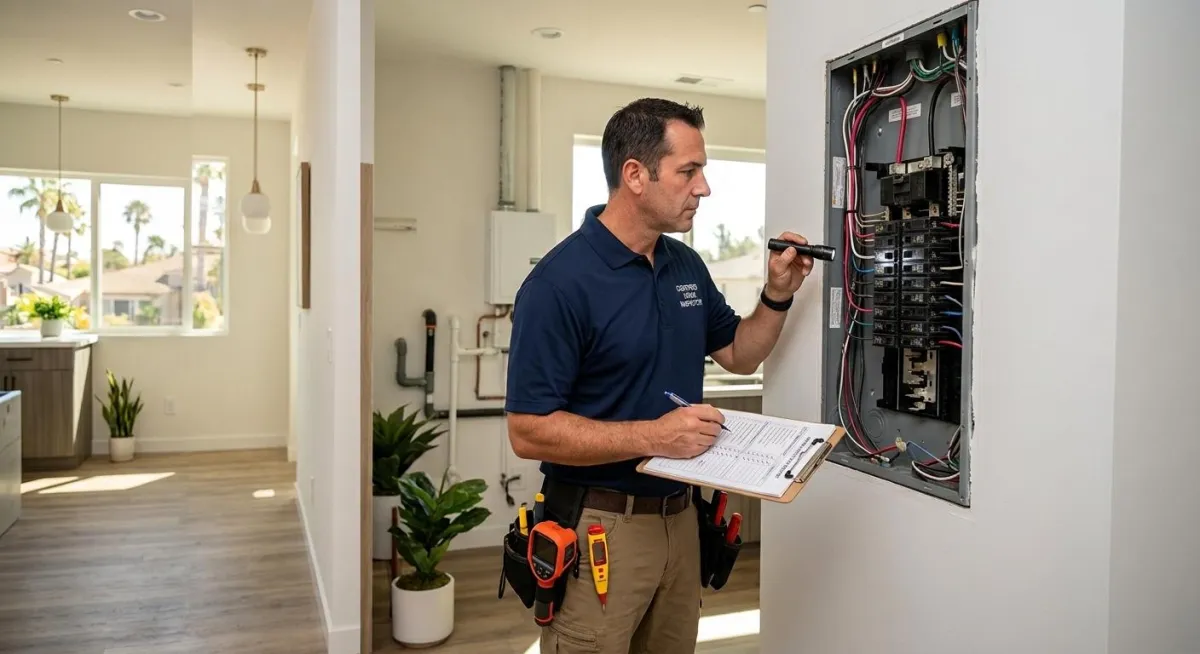
Electrical problems. Missing GFCI protection where it is required by code, reversed wire connections, improperly installed breakers, or junction boxes without proper covers.
Plumbing issues. Improper slope on drain lines that can cause slow drains or backups. Leaking connections under sinks or behind walls. Missing cleanout access points.
Roof defects. Improperly installed flashing around chimneys, skylights, or valleys. Missing or incorrectly placed roofing nails. Ridge vents that are not properly aligned.
Grading and drainage problems. Soil that is graded toward the foundation rather than away from it, which can cause water intrusion issues within the first year of ownership.
Missing or insufficient insulation. Gaps in insulation installation that affect energy efficiency and are invisible once drywall is in place.
Structural issues. Improperly installed hardware, missing hangers, or fastening errors that passed a framing inspection but create long-term concerns.
None of these are hypothetical. They are documented findings on new construction inspections across Southern California every year.
Why the Builder’s Warranty Does Not Replace an Inspection
New construction homes typically come with a builder’s warranty – often a one-year warranty on workmanship and a ten-year structural warranty.
That sounds reassuring. But there is an important distinction.
A warranty covers defects after they become apparent. An inspection finds issues before they cause damage, before you have been living with a problem for months, and before the warranty claim process becomes necessary.
Identifying an issue at the inspection stage means it gets corrected before you close – on the builder’s dime, cleanly, as part of the transaction. Identifying it after you have moved in means you are filing a warranty claim, waiting for a response, scheduling a repair, and potentially dealing with disruption to your household.
An inspection protects you before the problem starts. A warranty responds after it does. Both are useful. Neither replaces the other.
The Builder’s Inspector vs. Your Inspector
Many builders have their own inspectors or quality control processes. That is a starting point – but it is not the same as a third-party inspection.
The builder’s quality control team works for the builder. Their job is to identify issues the builder needs to fix before delivery. That is genuinely valuable. But an independent inspector works for you – their job is to make sure you have a complete, unbiased picture of what you are buying, including anything the builder’s process may have missed.
In a transaction involving hundreds of thousands of dollars, having an independent set of eyes – someone with no financial interest in the sale going through – is exactly the protection a buyer deserves.
What to Do on a New Construction Purchase in Whittier
Here is what I recommend to every buyer purchasing new construction in Whittier or the surrounding communities:
1. Schedule a pre-drywall inspection if possible. Before drywall goes up, an inspector can see the framing, electrical rough-in, and plumbing in the walls. This is one of the best opportunities to catch issues that will be invisible once the walls are closed.
2. Schedule a final inspection before closing. After the home is complete and before you take possession, a licensed inspector should walk the entire home. Any findings should be addressed by the builder before you close.
3. Schedule an 11-month inspection. Most builder warranties have a one-year workmanship component. At the 11-month mark, schedule another inspection to identify anything that has developed during the first year of the home settling and being used. Submit those findings to the builder for warranty repair before the one-year window closes.
The Bottom Line
A brand new home is not automatically a defect-free home.
Construction is a complex process involving dozens of subcontractors, tight timelines, and the normal imperfections of human work. A licensed home inspector is your best tool for finding what was missed before you take on ownership.
The inspection fee is a fraction of what a single undetected issue can cost after you close. It is not optional – it is essential.
Schedule a time to talk about navigating the buying process the right way in Whittier and the surrounding communities.
Edgar Cuevas
Whittier and Surrounding Communities | Broker & Owner
Helping buyers and sellers navigate the housing market in:
Whittier - Norwalk - La Mirada - Santa Fe Springs - Pico Rivera - El Monte - Hacienda Heights - La Puente - Valinda - West Covina
Website: xprtrealestate.com
Say hello on socials: Instagram | Facebook | TikTok
Monthly market updates: YouTube

Blogs
The New Construction Myth: Why You Still Need an Inspection in Whittier, CA
The New Construction Myth: Why You Still Need an Inspection in Whittier, CA
If you are buying a brand new home in Whittier or anywhere in the surrounding communities, you may have heard something like this:
“It’s brand new – why would you need an inspection?”
It is one of the most common and most expensive myths in real estate. And it costs buyers real money every year.
Here is the truth about new construction inspections – and why skipping one is never the right call.
The Myth: New Means Perfect
The assumption behind skipping an inspection on new construction is understandable. A brand new home was just built. No one has lived in it. Everything is fresh off the assembly line.
But construction is a human process. And human processes have errors.
New homes are built by multiple subcontractors – framers, electricians, plumbers, HVAC technicians, roofers, insulators, drywall crews – all working on overlapping schedules under time pressure. The coordination required to deliver a completed home is significant. And the opportunities for something to be done incorrectly, incompletely, or out of sequence are real.
Municipal building inspectors do inspect new construction. But they are checking for code compliance at specific stages of the build – they are not doing the comprehensive, whole-home evaluation a licensed home inspector performs after the home is complete.
What New Construction Inspectors Actually Find
If you have ever talked to a home inspector who works on new builds, the list of what they find in brand new homes is genuinely surprising.
Common findings on new construction inspections include:
Improper HVAC installation. Ductwork that is not properly sealed, registers in the wrong positions, or a system that is not balanced across the home. These issues affect comfort and energy efficiency from day one.
Electrical problems. Missing GFCI protection where it is required by code, reversed wire connections, improperly installed breakers, or junction boxes without proper covers.
Plumbing issues. Improper slope on drain lines that can cause slow drains or backups. Leaking connections under sinks or behind walls. Missing cleanout access points.
Roof defects. Improperly installed flashing around chimneys, skylights, or valleys. Missing or incorrectly placed roofing nails. Ridge vents that are not properly aligned.
Grading and drainage problems. Soil that is graded toward the foundation rather than away from it, which can cause water intrusion issues within the first year of ownership.
Missing or insufficient insulation. Gaps in insulation installation that affect energy efficiency and are invisible once drywall is in place.
Structural issues. Improperly installed hardware, missing hangers, or fastening errors that passed a framing inspection but create long-term concerns.
None of these are hypothetical. They are documented findings on new construction inspections across Southern California every year.
Why the Builder’s Warranty Does Not Replace an Inspection
New construction homes typically come with a builder’s warranty – often a one-year warranty on workmanship and a ten-year structural warranty.
That sounds reassuring. But there is an important distinction.
A warranty covers defects after they become apparent. An inspection finds issues before they cause damage, before you have been living with a problem for months, and before the warranty claim process becomes necessary.
Identifying an issue at the inspection stage means it gets corrected before you close – on the builder’s dime, cleanly, as part of the transaction. Identifying it after you have moved in means you are filing a warranty claim, waiting for a response, scheduling a repair, and potentially dealing with disruption to your household.
An inspection protects you before the problem starts. A warranty responds after it does. Both are useful. Neither replaces the other.
The Builder’s Inspector vs. Your Inspector
Many builders have their own inspectors or quality control processes. That is a starting point – but it is not the same as a third-party inspection.
The builder’s quality control team works for the builder. Their job is to identify issues the builder needs to fix before delivery. That is genuinely valuable. But an independent inspector works for you – their job is to make sure you have a complete, unbiased picture of what you are buying, including anything the builder’s process may have missed.
In a transaction involving hundreds of thousands of dollars, having an independent set of eyes – someone with no financial interest in the sale going through – is exactly the protection a buyer deserves.
What to Do on a New Construction Purchase in Whittier
Here is what I recommend to every buyer purchasing new construction in Whittier or the surrounding communities:
1. Schedule a pre-drywall inspection if possible. Before drywall goes up, an inspector can see the framing, electrical rough-in, and plumbing in the walls. This is one of the best opportunities to catch issues that will be invisible once the walls are closed.
2. Schedule a final inspection before closing. After the home is complete and before you take possession, a licensed inspector should walk the entire home. Any findings should be addressed by the builder before you close.
3. Schedule an 11-month inspection. Most builder warranties have a one-year workmanship component. At the 11-month mark, schedule another inspection to identify anything that has developed during the first year of the home settling and being used. Submit those findings to the builder for warranty repair before the one-year window closes.
The Bottom Line
A brand new home is not automatically a defect-free home.
Construction is a complex process involving dozens of subcontractors, tight timelines, and the normal imperfections of human work. A licensed home inspector is your best tool for finding what was missed before you take on ownership.
The inspection fee is a fraction of what a single undetected issue can cost after you close. It is not optional – it is essential.
Schedule a time to talk about navigating the buying process the right way in Whittier and the surrounding communities.
Edgar Cuevas
Whittier and Surrounding Communities | Broker & Owner
Helping buyers and sellers navigate the housing market in:
Whittier - Norwalk - La Mirada - Santa Fe Springs - Pico Rivera - El Monte - Hacienda Heights - La Puente - Valinda - West Covina
Website: xprtrealestate.com
Say hello on socials: Instagram | Facebook | TikTok
Monthly market updates: YouTube
Edgar Cuevas Team is a licensed Broker in the
state of California and is a leading authority in Whittier, in Los Angeles County, California area real estate.
Our love for the communities we live and work in are why we do what we do
© 2026 XprtRealEstate.com. All Rights Reserved.
Meet The Team
Blog
Featured Listings
Sell Your Home
Buy A House
Search Homes






Edgar Cuevas Team is a licensed Broker in the
state of California and is a leading authority in Whittier, in Los Angeles.
© 2026 XprtRealEstate.com. All Rights Reserved.
Meet The Team
Blog
Featured Listings
Sell Your Home
Buy A House
Search Homes