
BLOG
5 Red Flags to Watch for at an Open House in Whittier, CA
5 Red Flags to Watch for at an Open House in Whittier, CA
Open houses are exciting. New spaces, fresh possibilities, and the very real feeling that this could be the one.
But open houses are also one of the easiest places for buyers to get swept up in the moment – and miss the signals that tell them something important about the home they are considering.
Here are 5 red flags to watch for the next time you walk through an open house in Whittier or the surrounding communities.
Red Flag #1 – Fresh Paint in Unusual Spots
Fresh paint is generally a good sign. But fresh paint in very specific, isolated areas – a single wall, a patch of ceiling, around a window, or in a corner – can be a seller trying to cover something they do not want you to see.
Water stains, mold, smoke damage, and cracks are commonly painted over before a home is listed. If a patch of paint looks noticeably newer than the surrounding walls, or if you can see a slight texture difference, that is worth noting. Run your hand along the surface if you can. A wall that was recently painted over a stain or crack often has a different feel than the surrounding area.
Always get a full inspection. But if you notice isolated fresh paint during the open house, flag it for your inspector specifically.
Red Flag #2 – Strong Odors Being Masked
The smell of a home tells you a lot.
Excessive air freshener, candles burning in every room, or an overwhelming scent of fresh cleaning products during an open house can sometimes be an attempt to cover something – pet urine that soaked into the subfloor, mold or mildew in walls or crawlspaces, or smoke damage that has worked its way into the structure.
This does not mean every candle is hiding something. Sellers naturally want their home to smell welcoming. But when the scent is particularly aggressive or concentrated in one area, it is worth paying attention to.
Open a closet and take a quiet breath. Check the garage if you can. Smell is harder to fake in spaces where the covering agent has not been applied.
Red Flag #3 – Soft or Uneven Floors
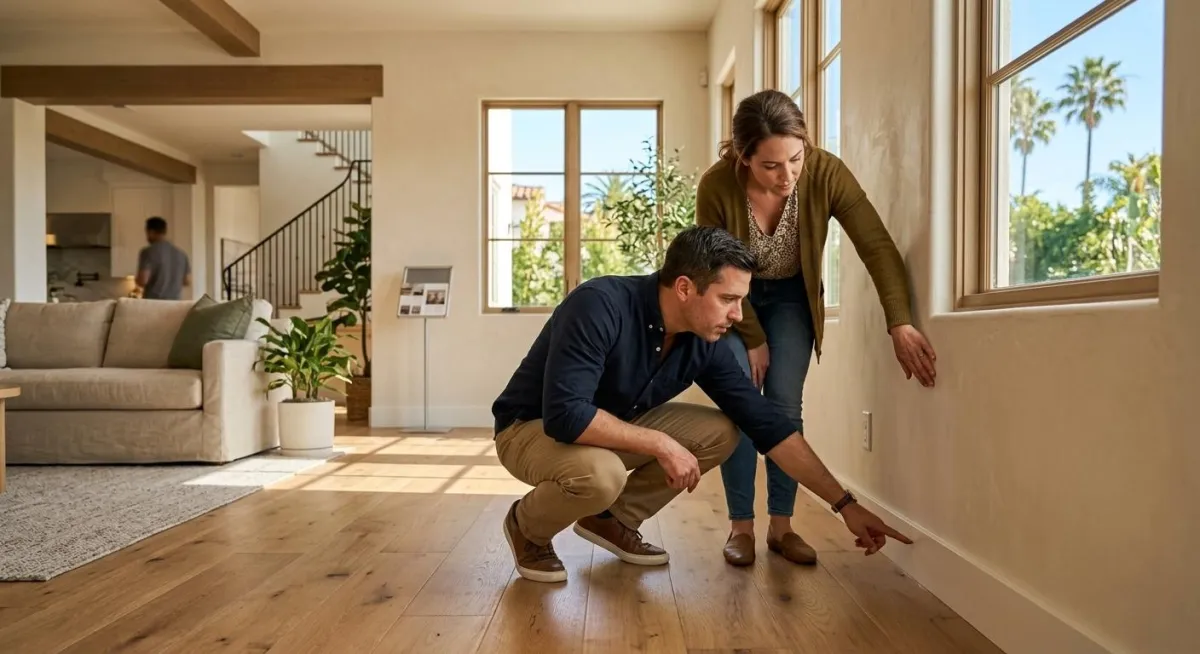
As you walk through the home, pay attention to how the floor feels underfoot.
Soft spots – areas that give slightly when you step on them – near bathrooms, kitchens, laundry rooms, or under windows can indicate water damage, rot, or subfloor deterioration. These are not cosmetic issues. They are structural ones that can involve significant repair costs.
Uneven floors, particularly in older Whittier homes built in the 1950s and 1960s, can indicate foundation settling or movement. A floor that slopes noticeably in any direction – run a marble across it if you want a quick test – deserves follow-up with a structural engineer before you commit.
Red Flag #4 – Doors and Windows That Do Not Work Properly
This one is easy to check yourself during an open house – and most buyers skip it entirely.
Open every door. Open every window if they are accessible. Close them. Do they latch properly? Does the door hang square in the frame? Does the window close all the way and lock?
Doors that stick, do not close flush, or have visible daylight gaps can indicate foundation movement – the house has shifted enough that the frames are no longer square. Windows that do not open or close properly may have been painted shut, have damaged hardware, or reflect frame warping from moisture.
In California, working windows are not just a comfort issue. They are an important safety feature. A home where several windows do not open properly is worth examining carefully.
Red Flag #5 – Vague or Evasive Answers From the Listing Agent
Pay attention to how the agent at the open house responds to direct questions.
“Has this home had any water intrusion?” “Are there any known roof issues?” “Why are the sellers moving?” “How long has this been on the market and why?”
You are entitled to honest answers. The listing agent represents the seller and is required by California law to disclose known material defects. If you get vague non-answers, deflections, or a sudden pivot to the home’s positive features every time you ask something specific – take note.
That does not mean the home has a problem. But a listing agent who is straightforward and transparent about the home’s history is a different situation than one who seems uncomfortable with direct questions. Either way, your inspector is your best protection – but how an agent responds to your questions tells you something about how the entire process is likely to go.
What to Do When You Notice a Red Flag
Noticing a red flag at an open house is not a reason to automatically walk away.
It is a reason to dig deeper.
Ask the listing agent about it directly. Note it specifically in your inspection request. If the inspection confirms a concern, you have options – negotiate a credit, request repairs, or walk away with your contingency protection intact.
The buyers who get hurt are the ones who see something concerning, talk themselves out of it, and skip the inspection. The buyers who navigate these situations well are the ones who notice, ask, inspect, and make informed decisions with real information in front of them.
Ready to Tour Homes in Whittier With Confidence?
Knowing what to look for changes everything about the open house experience.
Schedule a time to talk about what you are looking for and how to get there.
Edgar Cuevas
Whittier and Surrounding Communities | Broker & Owner
Helping buyers and sellers navigate the housing market in:
Whittier - Norwalk - La Mirada - Santa Fe Springs - Pico Rivera - El Monte - Hacienda Heights - La Puente - Valinda - West Covina
Website: xprtrealestate.com
Say hello on socials: Instagram | Facebook | TikTok
Monthly market updates: YouTube

Blogs
5 Red Flags to Watch for at an Open House in Whittier, CA
5 Red Flags to Watch for at an Open House in Whittier, CA
Open houses are exciting. New spaces, fresh possibilities, and the very real feeling that this could be the one.
But open houses are also one of the easiest places for buyers to get swept up in the moment – and miss the signals that tell them something important about the home they are considering.
Here are 5 red flags to watch for the next time you walk through an open house in Whittier or the surrounding communities.
Red Flag #1 – Fresh Paint in Unusual Spots
Fresh paint is generally a good sign. But fresh paint in very specific, isolated areas – a single wall, a patch of ceiling, around a window, or in a corner – can be a seller trying to cover something they do not want you to see.
Water stains, mold, smoke damage, and cracks are commonly painted over before a home is listed. If a patch of paint looks noticeably newer than the surrounding walls, or if you can see a slight texture difference, that is worth noting. Run your hand along the surface if you can. A wall that was recently painted over a stain or crack often has a different feel than the surrounding area.
Always get a full inspection. But if you notice isolated fresh paint during the open house, flag it for your inspector specifically.
Red Flag #2 – Strong Odors Being Masked
The smell of a home tells you a lot.
Excessive air freshener, candles burning in every room, or an overwhelming scent of fresh cleaning products during an open house can sometimes be an attempt to cover something – pet urine that soaked into the subfloor, mold or mildew in walls or crawlspaces, or smoke damage that has worked its way into the structure.
This does not mean every candle is hiding something. Sellers naturally want their home to smell welcoming. But when the scent is particularly aggressive or concentrated in one area, it is worth paying attention to.
Open a closet and take a quiet breath. Check the garage if you can. Smell is harder to fake in spaces where the covering agent has not been applied.
Red Flag #3 – Soft or Uneven Floors
As you walk through the home, pay attention to how the floor feels underfoot.
Soft spots – areas that give slightly when you step on them – near bathrooms, kitchens, laundry rooms, or under windows can indicate water damage, rot, or subfloor deterioration. These are not cosmetic issues. They are structural ones that can involve significant repair costs.
Uneven floors, particularly in older Whittier homes built in the 1950s and 1960s, can indicate foundation settling or movement. A floor that slopes noticeably in any direction – run a marble across it if you want a quick test – deserves follow-up with a structural engineer before you commit.
Red Flag #4 – Doors and Windows That Do Not Work Properly
This one is easy to check yourself during an open house – and most buyers skip it entirely.
Open every door. Open every window if they are accessible. Close them. Do they latch properly? Does the door hang square in the frame? Does the window close all the way and lock?
Doors that stick, do not close flush, or have visible daylight gaps can indicate foundation movement – the house has shifted enough that the frames are no longer square. Windows that do not open or close properly may have been painted shut, have damaged hardware, or reflect frame warping from moisture.
In California, working windows are not just a comfort issue. They are an important safety feature. A home where several windows do not open properly is worth examining carefully.
Red Flag #5 – Vague or Evasive Answers From the Listing Agent
Pay attention to how the agent at the open house responds to direct questions.
“Has this home had any water intrusion?” “Are there any known roof issues?” “Why are the sellers moving?” “How long has this been on the market and why?”
You are entitled to honest answers. The listing agent represents the seller and is required by California law to disclose known material defects. If you get vague non-answers, deflections, or a sudden pivot to the home’s positive features every time you ask something specific – take note.
That does not mean the home has a problem. But a listing agent who is straightforward and transparent about the home’s history is a different situation than one who seems uncomfortable with direct questions. Either way, your inspector is your best protection – but how an agent responds to your questions tells you something about how the entire process is likely to go.
What to Do When You Notice a Red Flag
Noticing a red flag at an open house is not a reason to automatically walk away.
It is a reason to dig deeper.
Ask the listing agent about it directly. Note it specifically in your inspection request. If the inspection confirms a concern, you have options – negotiate a credit, request repairs, or walk away with your contingency protection intact.
The buyers who get hurt are the ones who see something concerning, talk themselves out of it, and skip the inspection. The buyers who navigate these situations well are the ones who notice, ask, inspect, and make informed decisions with real information in front of them.
Ready to Tour Homes in Whittier With Confidence?
Knowing what to look for changes everything about the open house experience.
Schedule a time to talk about what you are looking for and how to get there.
Edgar Cuevas
Whittier and Surrounding Communities | Broker & Owner
Helping buyers and sellers navigate the housing market in:
Whittier - Norwalk - La Mirada - Santa Fe Springs - Pico Rivera - El Monte - Hacienda Heights - La Puente - Valinda - West Covina
Website: xprtrealestate.com
Say hello on socials: Instagram | Facebook | TikTok
Monthly market updates: YouTube
Edgar Cuevas Team is a licensed Broker in the
state of California and is a leading authority in Whittier, in Los Angeles County, California area real estate.
Our love for the communities we live and work in are why we do what we do
© 2026 XprtRealEstate.com. All Rights Reserved.
Meet The Team
Blog
Featured Listings
Sell Your Home
Buy A House
Search Homes






Edgar Cuevas Team is a licensed Broker in the
state of California and is a leading authority in Whittier, in Los Angeles.
© 2026 XprtRealEstate.com. All Rights Reserved.
Meet The Team
Blog
Featured Listings
Sell Your Home
Buy A House
Search Homes